Local Information
Five Walks around Wendron
Information about walks around the local area
Five Walks around Wendron
by Bill Scolding
which was published in April 2009 with financial help from
Awards for All
Cornwall County Council
and the Cornish Mining World Heritage Site Partnership
Copies of the booklet can be collected free of charge from various locations around the Parish, including:
Rame Cross Post Office and Stores
Golden Lion Inn, Stithians Lake
Telephone Box, Medlyn Moor, Porkellis
and
Helston Museum
From the slopes of Carnmenellis you can see all of Wendron, from the lake at Stithians to the outskirts of Helston, and all the rolling fields and hill-top moors in between, spiked with mine stacks and hatched with hedges and dry-stone walls.
This book will be your perfect companion as you explore the by-ways and villages of this historic landscape – shaped by waterwheel and steam engine, Neolithic axe and medieval hoe, miner’s shovel and quarryman’s hammer.
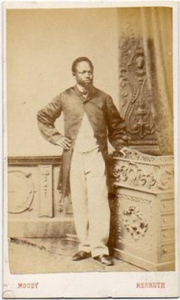
Along the way you’ll hear tales of roistering Pastor Wills and honey-thief James Martin, of slave-boy Evaristo Muchovela and the fighting farmers of Pollangreen. You’ll accompany Dr Who on a time-trip to Trenethick Barton; discover the awful fate of the drowned miners of Porkellis; and relive the night when the Luftwaffe bombed Farmer Tripp’s bullocks.
Featuring detailed maps, archive pictures and wildlife photography, this book will help you learn about buddles, bobs and bal maidens; calculate how long it would take to drink Stithians Reservoir dry; and identify marsh woundwort and stinking cinquefoil.
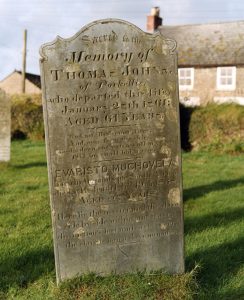
A memorial in the churchyard opposite Wendron church has a curious tale to tell. In 1838, Porkellis miner Thomas Johns was working in Rio de Janeiro and bought a seven-year-old slave boy, Evaristo Muchovela, originally from Mozambique. When illness drove Johns homewards in 1860, he offered the African the choice of staying in Brazil as a free man, or coming to Cornwall to live with him as a paid servant. Evaristo chose Wendron over Rio, but soon after, in January 1861, Johns died of consumption. Alone, in an alien country, Evaristo took lodgings with retired farmer Joseph Gundrey in Porkellis, and went to work for cabinetmaker William Wales in Redruth, who considered his apprentice a first-class workman. Seven years later, Evaristo succumbed to the same disease, and was buried in his former master’s grave: ‘distinction’s lost and caste is o’er, the slave is now a slave no more.’ Inspired by the grave, Helston writer Patrick Carroll wrote the play Evaristo’s Epitaph, broadcast on BBC Radio 4 in 2002.